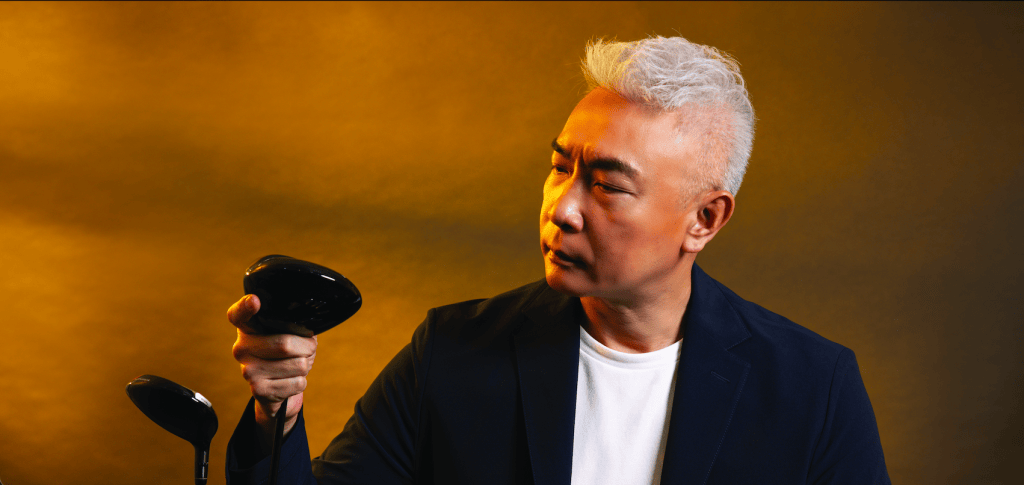
Actor Tay Ping Hui finds life asking more of him than ever before. He probably wouldn’t want it any other way.
At a time when life is asking more of him than ever before, Tay Ping Hui finds himself embracing a role no script could have prepared him for. Yet through family, film and golf, one philosophy continues to guide him: the hardest path often leads to the richest rewards.
Every day it seems, someone from the family is at the hospital.
Tay Ping Hui and his three siblings take turns sitting beside their mother, making sure she is never alone. Pancreatic cancer has reduced life to a series of small routines— checking on her comfort, speaking softly when dementia leaves her confused, answering the same questions again and again. Back home, their father, who also lives with dementia, often asks why his wife has not returned.
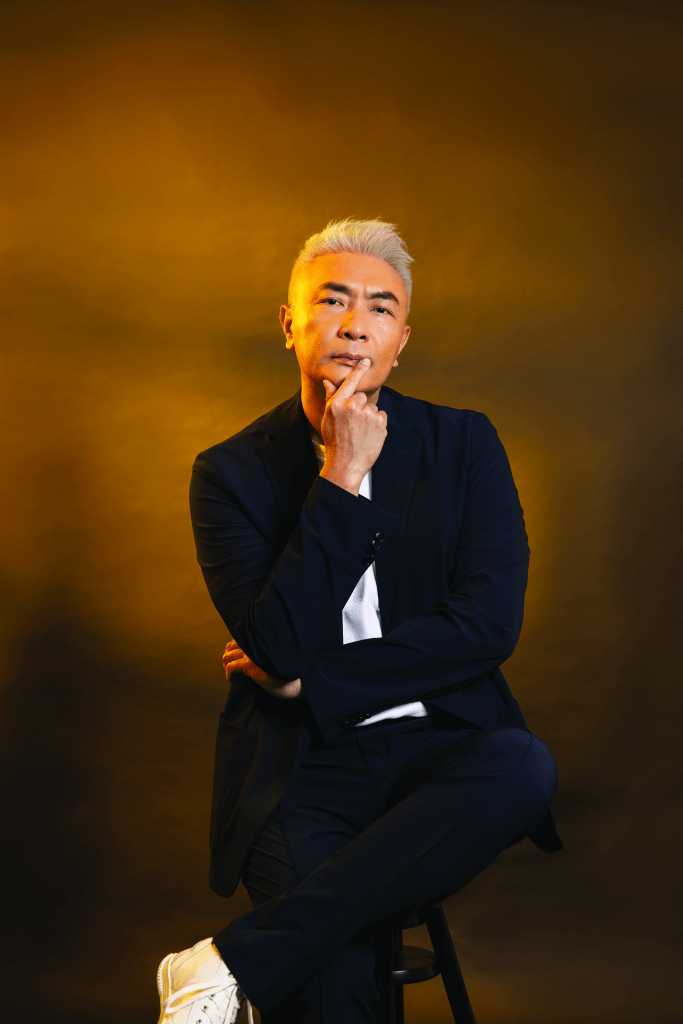
A little over a year ago, his mother was diagnosed with Stage 2B pancreatic cancer. Faced with the option of a Whipple procedure—a major operation involving the pancreas, stomach, gallbladder and surrounding organs— or a less invasive approach, the family chose to insert a stent to relieve the blocked bile duct before proceeding with proton therapy and chemotherapy. The tumour initially responded but returned aggressively earlier this year and has since spread to her liver.
Today, the objective is no longer to cure the disease but to preserve her quality of life. Dementia has complicated that journey, leaving her frightened and disoriented at times. It is why someone from the family remains by her side, day and night.
He speaks matter-of-factly, pausing only occasionally before moving on to the next practical concern.
“It’s been a trying time,” Tay says. “Psychologically, emotionally and physically. Anyone who’s been through it will understand.”
It has also changed the rhythm of his own life.
“I’m not taking projects that require me to travel for long periods,” he says. “Not now.”
For a man whose career has rarely stood still, it marks an unusual pause. Yet it is also entirely consistent with the way he has approached life. Every stage has been defined not by chasing the next accolade, but by recognising what matters most at that particular moment.
That instinct has shaped a career spanning more than three decades.
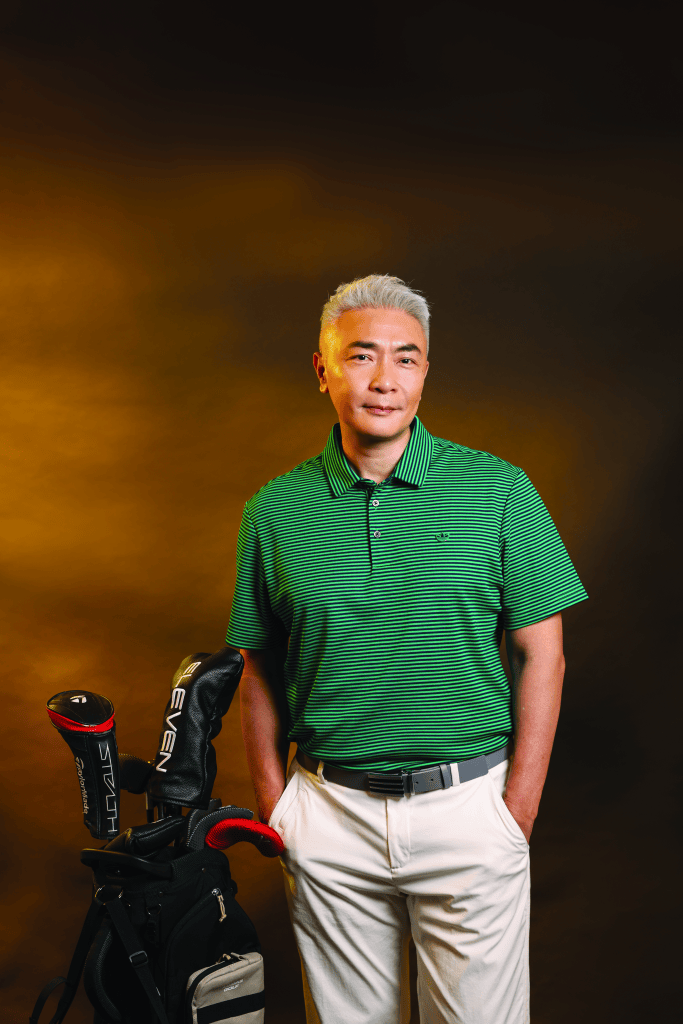
After graduating from the National University of Singapore with a degree in Economics and Political Science, Tay entered the corporate world before finding his way into acting. Audiences embraced him through dramas such as “The Unbeatables”, “Portrait of Home” and “The Little Nyonya”, while his directorial debut, “Meeting the Giant”, hinted at the creative path he would eventually pursue behind the camera.
Across three decades, he became one of the defining faces of Singapore television before successfully building a second career in China’s far larger entertainment industry—an uncommon path for a local actor.
For many performers, that would have been enough. For Tay, it was simply the point where the next question began.
He accepted opportunities in China, willingly leaving behind the comfort of being one of Singapore’s most established actors to enter a market where almost nobody knew his name. The decision surprised many people. Why start again when you had already reached the summit?
His answer is disarmingly straightforward. “I wanted to experience something different.”
He likens it to martial arts. Imagine earning a black belt after decades of training, only to walk into another dojo where everyone assumes you’re a beginner. Nobody cares what you’ve achieved elsewhere. Respect has to be earned all over again.

“I enjoy surprising people,” he says, smiling. The comment reveals something fundamental about his character. Throughout his career, Tay has repeatedly chosen situations that force him to grow. Reinvention, for him, is not a career strategy. It is simply the way he stays curious.
Before accepting any project today, he asks himself four questions. Have I done this before? If I have, is it worth doing again? Will I learn something new? And finally, will it pay reasonably?
The sequence is revealing. Curiosity comes before comfort.
That same curiosity is now pulling him behind the camera. While acting remains part of his life, Tay is increasingly focused on directing, writing and developing original concepts. Several projects are quietly taking shape, including travel and food programmes, as well as potential collaborations involving partners in the Middle East. He is also exploring how emerging technologies, including artificial intelligence, might shape the future of storytelling.
Directing, he says, has humbled him all over again.
“As an actor, you receive the script, create the character and perform. As a director, you’re involved from the beginning until the end of post-production. If it’s your project, you also have to find the money.”
That challenge becomes even greater in Singapore, where limited budgets and a relatively small domestic market often constrain creative ambition. Yet Tay remains convinced the issue is not talent.
“I believe the best of us can stand toe-to-toe with anyone in the world if we’re given the right opportunity.”
He has made that argument consistently over the years. Singapore produces capable actors, writers and filmmakers, he believes, but too often local audiences look elsewhere before recognising quality at home. Success overseas frequently becomes the validation required before Singaporeans begin paying attention.
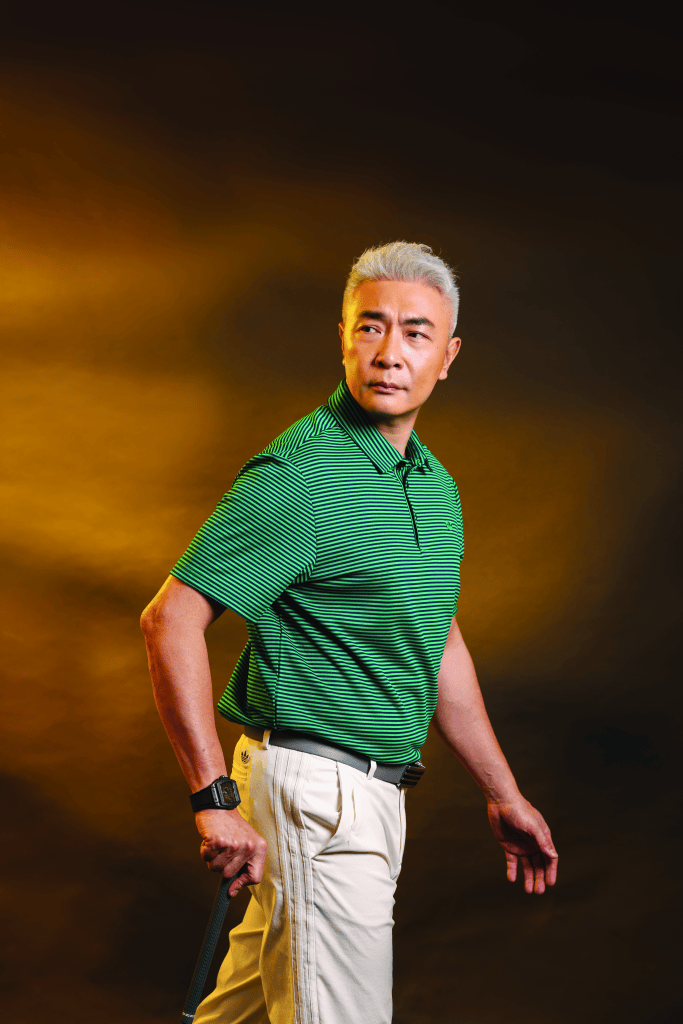
“The more I know,” he reflects, “the more I realise I’m nothing.” Perhaps that explains why he continues searching for unfamiliar ground. Golf arrived in his life much the same way.
Having spent his youth playing competitive basketball, Tay assumed golf could not be especially difficult. His friends wasted little time correcting that assumption. Instead of easing him into the game with lessons or a driving range, they took him straight onto a golf course in Malaysia.
Six and a half hours later, he had learned his first lesson. “I thought if I wanted to hit the ball further, I just had to swing faster,” he says, laughing. “The ball stayed exactly where it was.”
Most people would have blamed the game. Tay blamed himself. “I don’t like losing,” he admits.
He could only afford two coaching lessons, so he taught himself the rest. Books, countless hours on the driving range and endless repetition gradually replaced frustration with understanding. Like acting, golf rewarded discipline far more than natural ability.
“If you ever see someone standing around making practice swings for no reason,” he jokes, “that person has been poisoned by golf.” The obsession paid off remarkably quickly.
Less than two years after taking up the game, Tay stood on the tee of a 167-metre uphill par three at Laguna National during a corporate tournament. Holding a six-iron, he wasn’t chasing a hole-in-one. He was simply trying to find the green.
The strike felt solid. The ball climbed on line, landed on the green, took a single bounce and disappeared into the cup.
The hole-in-one lasted only a few seconds. What followed lasted years.
The prize was a brand-new Mercedes-Benz C-Class. National headlines followed, along with a long-standing relationship with Mercedes-Benz that eventually saw him become a brand ambassador. It also opened doors to advanced performance driving at the Nürburgring and, later, Formula One experiences through TAG Heuer— unexpected chapters that all traced back to one swing.
He laughs that perhaps he used up all his golfing luck that afternoon. “I’ve never had another hole-in-one.”
Today, golf occupies a different place in his life.
Most of his rounds are charity events rather than competitions. The score matters less than the opportunity to spend time with friends, support worthwhile causes and enjoy a few precious hours where the outside world falls away. For golfers, the feeling needs little explanation.
“The game forces you to be present,” he says. “You can’t play golf while worrying about something else.” It is a philosophy that reaches well beyond the fairways.
Like life, golf rarely rewards those searching for perfection. It asks only that you commit to the shot in front of you. Some days the lie is perfect. On others, it isn’t. Either way, you still have to swing.
Financially, Tay says he is fortunate. Years of careful planning and investments have given him the freedom to be selective about the projects he accepts. He says he could retire tomorrow if he wanted to. He simply has no interest in doing so.
“There are still things I want to experience.”
One ambition still makes him laugh. He has long joked that he would love to appear in a Star Wars film. His original dream was to play a Jedi, but these days he says he would happily settle for a stormtrooper if it meant stepping into that universe. “It’s still an experience.”

Another dream has nothing to do with film sets or television studios.
He wants to embrace van life.
He imagines travelling across continents in a campervan or Defender, exploring places well beyond the tourist trail. His wife, he says with a laugh, has only one condition. “There must be a proper toilet.”
Whether that journey eventually happens is almost beside the point. Like so many of his ambitions, it is driven less by the destination than by the experiences gathered along the way.
He still wants to direct projects with international reach. He hopes to write stories that matter and create opportunities for younger filmmakers. Success, to him, is no longer measured by awards or ratings, but by whether he continues to grow.
That has always been the thread connecting the different chapters of Tay Ping Hui’s life. Success has never been somewhere to settle. It has simply been permission to begin again.

Standing beside a hospital bed, developing a new television series, starting over in China or standing nervously over a golf ball for the first time—they are all expressions of the same instinct.
To keep moving.
Golf has a name for it.
Sometimes the safest route is around the trouble. Sometimes the bolder line asks you to carry the hazard, trust your swing and accept whatever comes next.
Throughout his life, Tay Ping Hui has chosen that line more often than not.
Golfers call it the Tiger Line.